
Transcript
Announcer:
You’re listening to On the Frontlines of Migraine on ReachMD. Here’s your host, Dr. Charles Turck.
Dr. Turck:
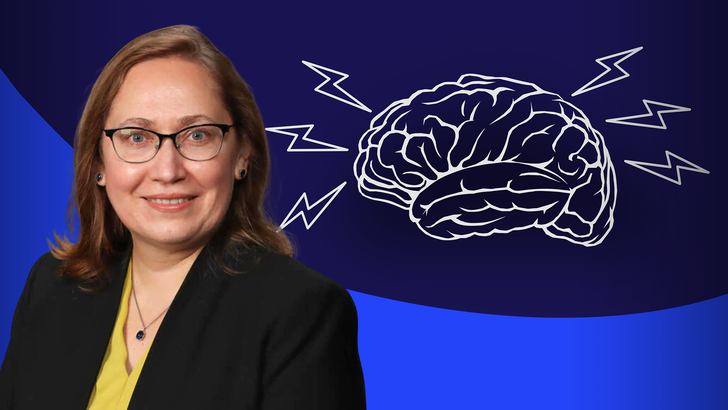
This is On the Frontlines of Migraine on ReachMD. I’m Dr. Charles Turck, and joining me to discuss current gaps in migraine care and strategies for overcoming them is Dr. Yulia Orlova. She’s a board-certified neurologist and headache specialist at Mayo Clinic in Jacksonville, Florida.
Dr. Orlova, welcome to the program.
Dr. Orlova:
Thank you. Thank you very much for having me.
Dr. Turck:
Absolutely. Well, jumping right in, Dr. Orlova, why is migraine such a persistent challenge to manage, even with the range of treatments we now have at our disposal?
Dr. Orlova:
Well, it’s probably one of the most burning topics in neurology in general and in headache particularly. And just thinking about migraine, it affects every seventh person on Earth, not just in the United States, but in every country. It’s so prevalent. There are so many patients that it’s hard to imagine that every patient has exactly the same type of condition and will respond exactly the same to the medications. But there are so many different types of migraine. We have people who have very well controlled, occasional migraine attacks—maybe only a few times in their entire life, and then we have people who have headache every single day for decades, and everything in between. We have some people with migraine with aura, some without aura, not to mention that many people might have a headache as a symptom of another condition. So it’s a very prevalent, very common condition that affects both men and women, and both kids and octogenarians, older individuals. Pretty much every age and both genders are affected.
But another challenge from a biological point of view is that there are probably different biological types of migraine. And they even say in this field that maybe migraine is not just a single disease, but there are maybe different types. And therefore, what works for one person for this type of migraine may not work for another. And we see it in clinical practice all the time, that there is absolutely no medication that works 100 percent of the time in 100 percent of individuals. And even in the same individual, there may be some months the medication is working, and in other months, it’s not working in a different period of life. There may be some changes in different response to medication. This is a big challenge.
Dr. Turck:
Now, zeroing in on some of the current treatment options, what are the key benefits and limitations of therapies like triptans, gepants, and inhibitors of calcitonin gene-related peptide, or CGRP?
Dr. Orlova:
Well, those are medications, first of all, serving a little bit of a different purpose. Some of them are preventive, meaning that the goal is to reduce headache frequency and intensity. CGRP monoclonal antibodies and injectable medication belong to this class. Some CGRP antagonists called gepants belong to this class. Triptans, however, are not preventive medication. They only work and they’re designed to work for individual headache attacks, so the purpose is a little bit different.
Triptans were probably changing the life of people with migraine when they were invented in the early 1990s. It was the first class of medications that really make a big difference in this field and help so many patients, but they also have issues. First of all, there’s a risk of medication overuse headache if they’re used too often, so that may not work for somebody who has a headache every day and needs something just to go about their day. So there’s a limited amount of medication we can use. Then there are contraindications. In people who have extensive cardiovascular risk factors of coronary artery disease, for example, or peripheral artery disease or stroke from narrowing of the vessels in the neck or cerebral vessels, triptans are contraindicated because they have a very mild vasoconstrictive effect. So for normal vessels, that might not be a big deal, but if there is a narrowing, then even a small constriction of the vessel may be critical for this individual. So that’s another challenge. Finally, as I was mentioning with other medications, they do not have a hundred percent relief in a hundred percent of cases. So treatment response varies. Best case scenario, there’s a 25 or 30 percent response to triptans, and we consider this successful treatment. So again, not every attack can be broken by this medication, not for every patient, not for the rest of your life, and not every day. So there is a limitation. Even though we still use this medication, for some people it’s a game changer, and for some it’s not.
Not everybody responds to this class of medication, even though the good news is that if somebody does not respond to one class of medication, they still respond to another class. So if triptans are not working for one person, gepants, which is a newer class of CGRP antagonist medication, might still be working—but still not 100 percent. And there’s still a large group of patients that either do not tolerate these medications or do not respond.
Another global challenge is that here in the United States, we have access to all the science and all this medication, but not every country has the access to these medications. They’re not readily available in every country for everybody, and they have to be mindful of this. We have to consider the access to these medications that can be very limited in many countries.
Dr. Turck:
Now, there’s been growing interest in options like sphenopalatine ganglion block, or SPG block for short. Would you walk us through what that is and the role it might play in migraine care?
Dr. Orlova:
Sphenopalatine ganglion block is one of minimally invasive interventions that have been used for alleviating the pain for more than 100 years, so it’s not something exactly new. What’s new is the technique: different local anesthetics that are being used. And there’s a variety of techniques for sphenopalatine ganglion, which is application of local anesthetics in the area where we have conglomerate of the nerves located behind the eye socket, very deep in a nasal cavity. There are different ways to get to this region, like a minimally invasive procedure through the nose. Then there’s other types of procedures that are more invasive that can be done through injection through the cheek. It’s just a matter of technique and different ways to get to the strategic region that serves as one of a hub of autonomic and painful symptoms in headache disorders.
Dr. Turck:
For those just tuning in, you’re listening to On the Frontlines of Migraine on ReachMD. I’m Dr. Charles Turck, and I’m speaking with Dr. Yulia Orlova about the evolving therapeutic landscape for migraine.
So, Dr. Orlova, let’s zoom out now and look at the bigger picture. What are the greatest challenges of incorporating newer or lesser-known interventions into everyday practice and how might we start to address them?
Dr. Orlova:
There are actually several of those that I can think of. First of all, science. We do not have enough good-quality trials that would be controlled with placebo—or in intervention, we would call it sham procedures. And in the absence of good quality of science, we do not have certainty in our recommendation. When do we recommend this treatment? When do we not recommend? What to expect? What not to expect? So I think that this is greatest methodological challenge, that we do not have enough data. We do not have enough science with solid evidence of data for interventions, such as sphenopalatine ganglion block, in the migraine treatment specifically.
But another challenge is that which is related to methodological issues as well: that there are so many different techniques. And I already mentioned that, from minimally invasive procedures to just get local anesthetic through the nose, as opposed to going for a procedure with specific equipment with x-ray machine guidance. So which is the best technique? So for the access to procedures under fluoroscopic guidance, you have to have equipment and the practice. To do procedure, you have to have equipment, and you have to have qualified personnel and trained physicians to perform these procedures, who will have enough experience and enough volume of patients to gain this experience so they can help better.
Then there’s a difference in the payment methods, like what’s covered by insurance and what’s not covered by insurance. We’re going back to the access, so not only access to professionals and equipment, but also access from a payment point of view—whether it’s affordable or not.
Dr. Turck:
Now, when you’re working with a patient who’s been through multiple treatments without much success, how do you support them, both clinically and emotionally?
Dr. Orlova:
Oh, this is a big question, and we try to walk along with patients through their symptoms. We try different options. We try to engage them in our research, in our education, and provide more educational resources. And, from practical point of view, probably consistency of continuity of care is a big one, because, like with any chronic condition, migraine is not something that can be fixed with one pill or one intervention. It is incremental care, and it’s not a one-and-done type of situation. It’s a trial and retrial, and it’s important to establish the rapport with patients that would actually trust your opinion and trust that you’re not just going to push another pill, another drug, another injection, but you’re really working with them and taking into account their needs and taking into account what they experienced in the past. So just working together and maintaining continuity of care, I think that also would be the two top ways in mind.
Dr. Turck:
Now, before we wrap up our program, Dr. Orlova, do you have any key takeaways you’d like to leave with our audience?
Dr. Orlova:
I think that continuity of care for chronic conditions is really important, so keep an open mind that if some options are not working, we’ll just have this frank discussion with the patient and set the goals. What are we trying to achieve? Are they happy with current regimen or not? And at what cost they are willing to continue exploring other options? That’s important. And I think that the patient goal should be at the center. And sometimes it’s a goal to achieve freedom from pain forever. That’s one type of goal, but probably not always realistic. And sometimes people say, “Well, I just want to have ability to maintain my job or have some time with my kids,” and it’s a different type of goal. So set the goals specific to the patients and keep trying, but also keep the patient at the center.
Dr. Turck:
As those final thoughts bring us to the end of today’s program, I want to thank my guest, Dr. Yulia Orlova, for joining me to discuss unmet needs in migraine management and avenues for addressing them.
Dr. Orlova, thanks for being here today.
Dr. Orlova:
Thank you for having me.
Announcer:
You’ve been listening to On the Frontlines of Migraine on ReachMD. To access this and other episodes in our series, visit On the Frontlines of Migraine on ReachMD.com, where you can Be Part of the Knowledge. Thanks for listening!
